Ready to Attack 6th Grade School SVG Review
Evaluating the Design for Real-World Stitching
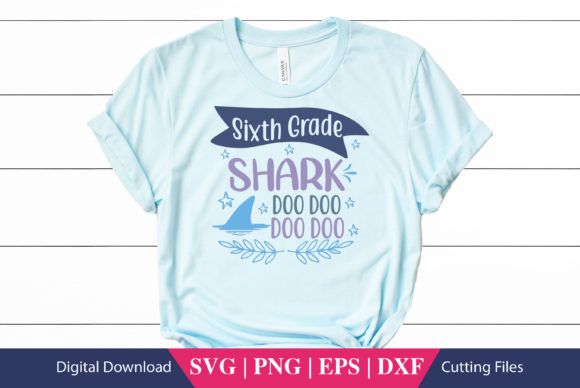
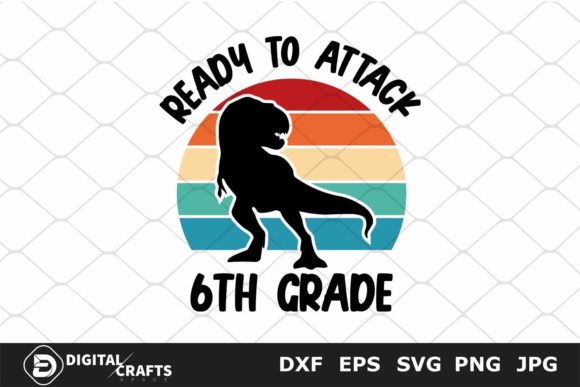
As a designer who bridges the gap between digital graphics and tangible textiles, I approach every new file with a specific question: will this actually look good when stitched out? When I first opened the Ready to Attack 6th Grade, School SVG, I wasn't just looking at vector lines; I was visualizing needle penetration and thread tension. This design captures a very specific transitional energy. Sixth grade is often the start of middle school or the pinnacle of elementary confidence, and the artwork reflects that boldness. The layout feels assertive yet playful, avoiding the overly cutesy aesthetic of lower grades while steering clear of the muted tones of high school merchandise.
From a professional standpoint, this graphic serves as an excellent foundation for a machine embroidery design. The shapes are distinct enough to translate well into stitch paths without becoming a muddy mess of overlapping threads. However, because this is provided as a vector graphic rather than a pre-digitized embroidery file, it requires a thoughtful digitizing strategy. As someone who creates custom apparel and personalized gifts, I see this design shining brightest on items that celebrate academic milestones. It has the visual weight necessary for a center-chest placement on a sweatshirt or a prominent panel on a tote bag, but it demands respect during the production phase to maintain its integrity.
A Real-World Scenario: The Middle School Transition Sweatshirt
To truly test the viability of this asset, I mentally placed it in a current client project: a batch of custom hoodies for a graduating 5th-grade class moving up to 6th grade. The goal was to create a keepsake that felt mature but still age-appropriate. Using the Ready to Attack 6th Grade, School SVG as the base, I evaluated how it would perform on a heavyweight cotton fleece.
In this scenario, the design’s bold typography and graphic elements suggest a combination of techniques. I would likely digitize the main text using a dense satin stitch or a puff effect to give it that varsity-letterman feel, while utilizing fill stitches for any illustrative icons. The challenge here is fabric texture. Fleece is forgiving, but it can swallow fine details. If I were to use this design for a sweatshirt embroidery project, I would need to ensure the underlay was robust enough to prevent the design from sinking into the pile. Conversely, if adapting this for a smoother surface like a canvas tote bag design, the crisp edges of the SVG would allow for sharper running stitches and cleaner applique borders. This versatility makes it a valuable asset for a craft business or Etsy seller looking to offer cohesive collections across different product types.
Navigating Fabric Limitations and Hoop Constraints
While the graphic itself is versatile, not every substrate is a safe bet. Through years of trial and error, I have learned that bold, statement designs like this require careful pairing with materials. You must be cautious when applying this to stretchy performance fabrics or thin knits. The density required to make the "Ready to Attack" lettering pop can cause puckering on unstable fabrics if you do not use adequate stabilizer. For a baby embroidery project or lightweight summer tee, you might need to simplify the design or reduce the stitch density significantly to avoid creating a bulletproof patch that distorts the garment's drape.
Furthermore, consider your hoop size limitations before committing to a full-scale production run. This design likely has a wide aspect ratio given the length of the phrase. If you are working with a standard 4x4 hoop, you may need to split the design or resize it to the point where legibility suffers. Always check the final dimensions against your machine’s capabilities. Small lettering, particularly in words like "Grade" or "School," can become illegible if scaled down too aggressively. In my experience, maintaining a minimum height for satin columns is non-negotiable for professional results. If the resized text falls below 4mm, I would recommend modifying the SVG to a blockier font or switching to a simpler layout before digitizing.
Commercial Viability and Brand Consistency
For fellow creative entrepreneurs and small shop product developers, the commercial application of this graphic is significant. Back-to-school season is a massive revenue driver, and having a design that specifically targets the 6th-grade niche helps you stand out in a saturated market. Generic "Back to School" tags are everywhere; specific grade-level callouts convert better because they feel personalized. When used correctly, this design elevates the perceived value of a handmade product. It signals to the buyer that you understand their specific milestone.
However, professionalism extends beyond the stitch-out. Before listing any finished item or digital derivative, you must verify the licensing terms included in your download. The product includes SVG and EPS files compatible with Adobe Illustrator, Corel Draw, and cutting machines, but you must confirm whether commercial use of the digitized embroidery version is permitted. Additionally, when creating printable mockups for your listings, ensure the digital preview accurately represents what the embroidery will look like. Misleading customers with flat vector images when the actual product has textured stitching leads to returns and negative reviews. Use the SVG to create accurate color-blocked previews that manage customer expectations regarding detail and scale.
Essential Technical Notes for Makers
If you decide to bring the Ready to Attack 6th Grade, School SVG into your studio, treat it as a blueprint rather than a finished instruction manual. Here are practical steps I recommend based on professional best practices:
- Test Stitch First: Never run this design on a final product without a test sew-out on similar scrap fabric. Check for registration issues between color changes and verify that the text remains readable.
- Analyze Thread Contrast: Bold graphics rely on contrast. Test thread colors against both light and dark backgrounds. A navy design on a black hoodie might disappear, whereas the same design on heather gray will sing.
- Verify File Compatibility: While the zip folder contains SVG and EPS files for design software, remember these are vector graphics. You will need embroidery digitizing software to convert them into DST, PES, or other machine-specific formats unless you are using them strictly for vinyl cutting or sublimation.
- Stabilizer Selection: Match your backing to the fabric weight. Use cut-away stabilizer for knits and stretchy apparel to prevent distortion over time, and tear-away for stable woven fabrics like canvas or denim.
- Detail Inspection: Zoom in on the vector nodes before digitizing. Smooth out any jagged lines in the SVG to ensure your satin stitch columns flow smoothly without unnecessary trims or jumps.
- Licensing Check: Re-read the included license file. Confirm if you can sell physical embroidered items, digital embroidery files derived from this art, or both. Protect your business by staying compliant.
Final Thoughts on Design Application
The Ready to Attack 6th Grade, School SVG is more than just a seasonal graphic; it is a potential cornerstone for back-to-school inventory. Its strength lies in its specificity and bold visual hierarchy, making it ideal for commercial embroidery projects that target students and parents celebrating this academic step. Whether you are crafting a single personalized gift for a child or stocking an Etsy shop with grade-specific merchandise, success depends on respecting the technical translation from screen to stitch. By paying attention to fabric choice, stabilization, and appropriate scaling, you can transform this digital asset into a high-quality embroidered product that resonates with buyers and withstands the rigors of the school year. Always prioritize the quality of the stitch-out over the speed of production, as your reputation as a maker depends on the durability and clarity of your finished work.